JUNO 预计将在2025年8月开始收集数据,经过大约10年的建设,使中国在全球竞争中领先于那些被称为“幽灵粒子”的粒子,这些粒子几乎没有质量和电荷,每秒钟有数十亿个穿过人类的身体。 Japan’s Hyper-Kamiokande 观测站预计到2027年才会开始数据收集,而美国的 Deep Underground Neutrino Experiment 预计将在2030年代启动。
随着美中在科学和技术领域的竞争加剧,JUNO 是中国作为科学超级大国地位日益增强的证明。
“在科学中,成为第一是最重要的,”项目负责人、Chinese Academy of Sciences 高能物理研究所所长 Wang Yifang 说。“成为第二没什么意义。”
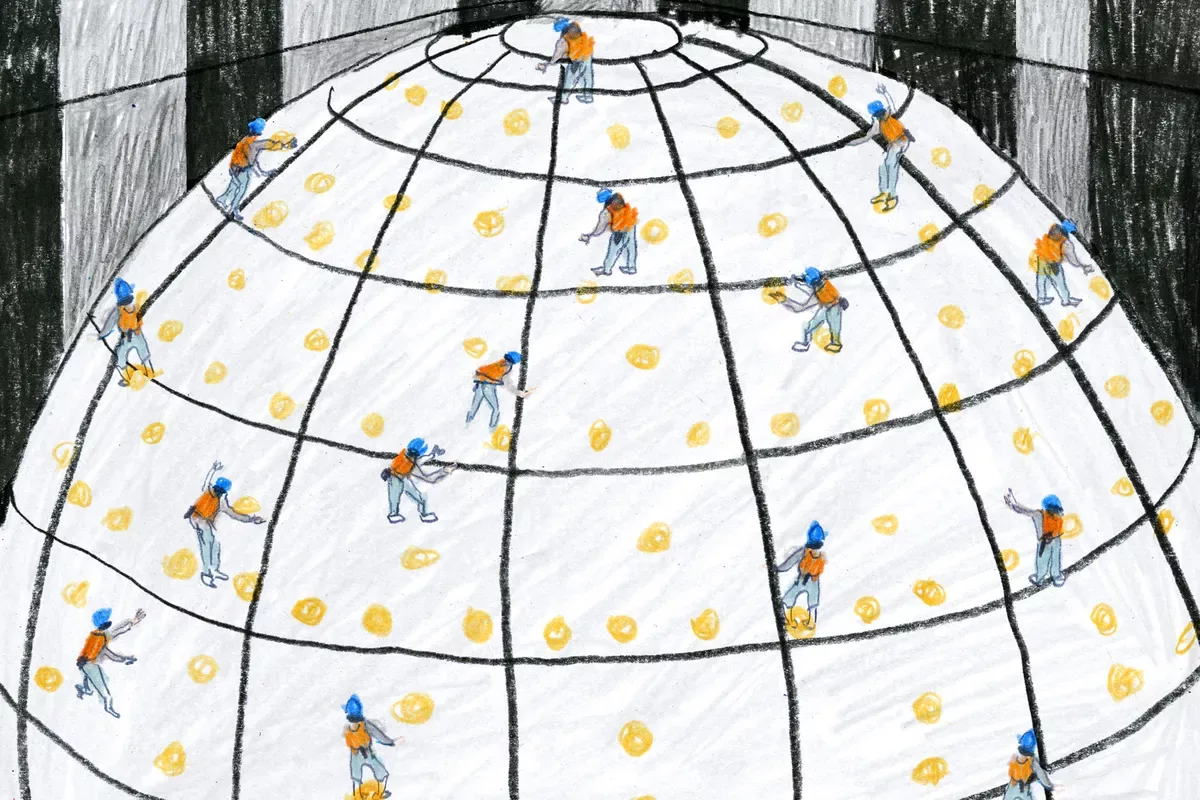
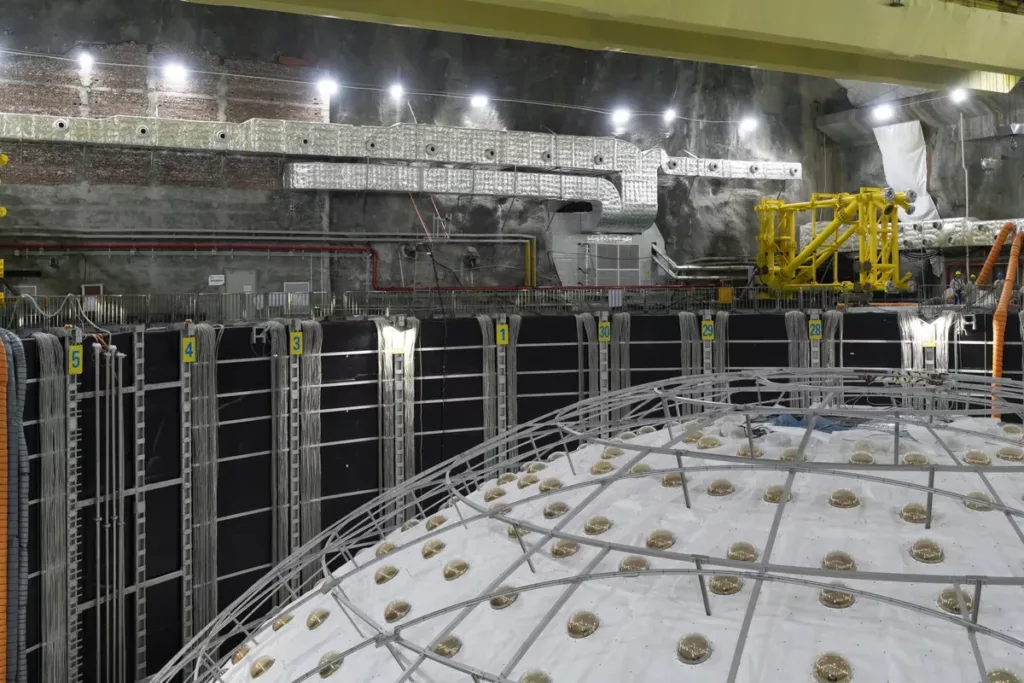
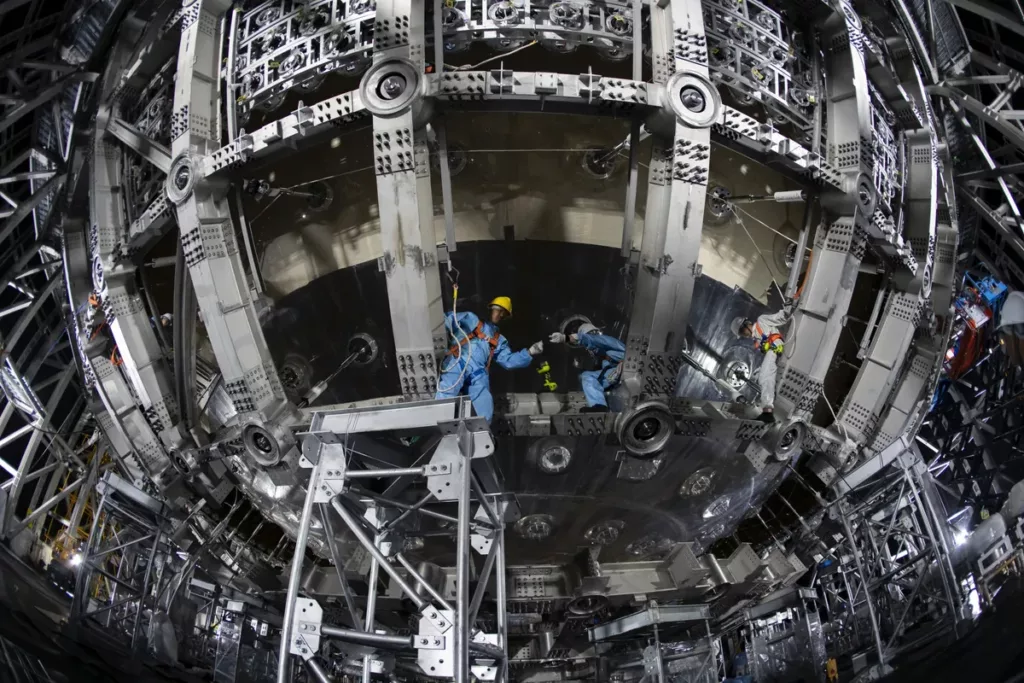
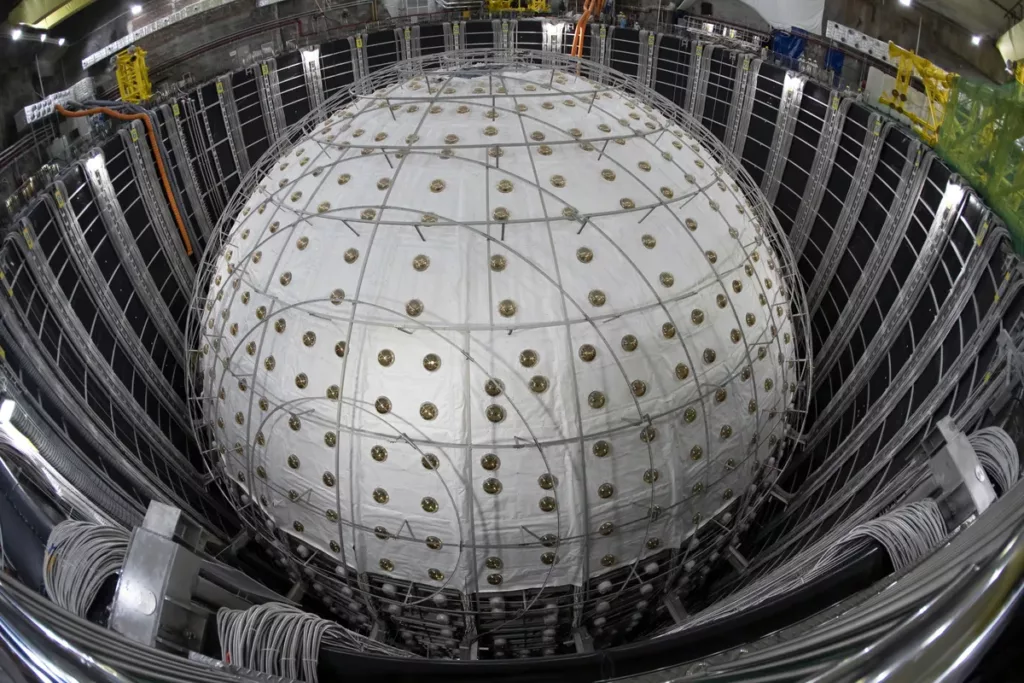
Photomultiplier tubes on the detector under construction at the underground facilities of the Jiangmen Underground Neutrino Observatory (JUNO) in Jiangmen, Guangdong province, China, on Oct. 11.
By studying the mass of neutrinos, scientists hope to gain new insights into the Big Bang, and how fast the cosmos is expanding.
曾几何时,美国愿意与中国分享其研究成果,部分原因是美国在科学和技术方面的主导地位。在1979年,随着中国向世界开放,两国签署了《科学和技术合作协议》,为超过四十年的合作铺平了道路。高峰出现在 Obama 政府期间,建立了 US-China Clean Energy Research Center,为气候合作奠定了基础。1979年的协议于8月底到期。
By studying the mass of neutrinos, scientists hope to gain new insights into the Big Bang, and how fast the cosmos is expanding.
美中在科学和技术领域的竞争正在加剧,研究表明,合作水平正在下降。
为 Springer Nature 撰写关于中国和科学的文章的 Jacob Dreyer 表示,Biden 政府限制中国在半导体和人工智能方面的发展,使北京获得了“它最需要的——心理上的感觉,如果中国不搞定这些,强权将会欺压它。”
“激烈的竞争是一种强大的力量,孕育创新,”他说。
中国国家主席 Xi Jinping 呼吁国家加速基础科学研究,以便在关键技术上实现自给自足。这位曾在著名的 Tsinghua University 学习化学工程的总统认为,科学将是经济增长的未来驱动力,因为其他支柱如房地产和国内消费正在减弱。